What to Wear for a Civil Ceremony or Engagement?
When choosing an engagement or civil ceremony outfit, the first question should not be “Which dress is more beautiful?” A more important question is: What is the event actually like?
A dress chosen for a small courthouse ceremony does not necessarily work for an engagement celebration with many guests in a formal venue. Even two events with a similar number of guests may require completely different outfits because the venue, timing, atmosphere, and level of formality can change the entire styling approach.
That is why it is better to start with the event itself and then choose the outfit that fits it.
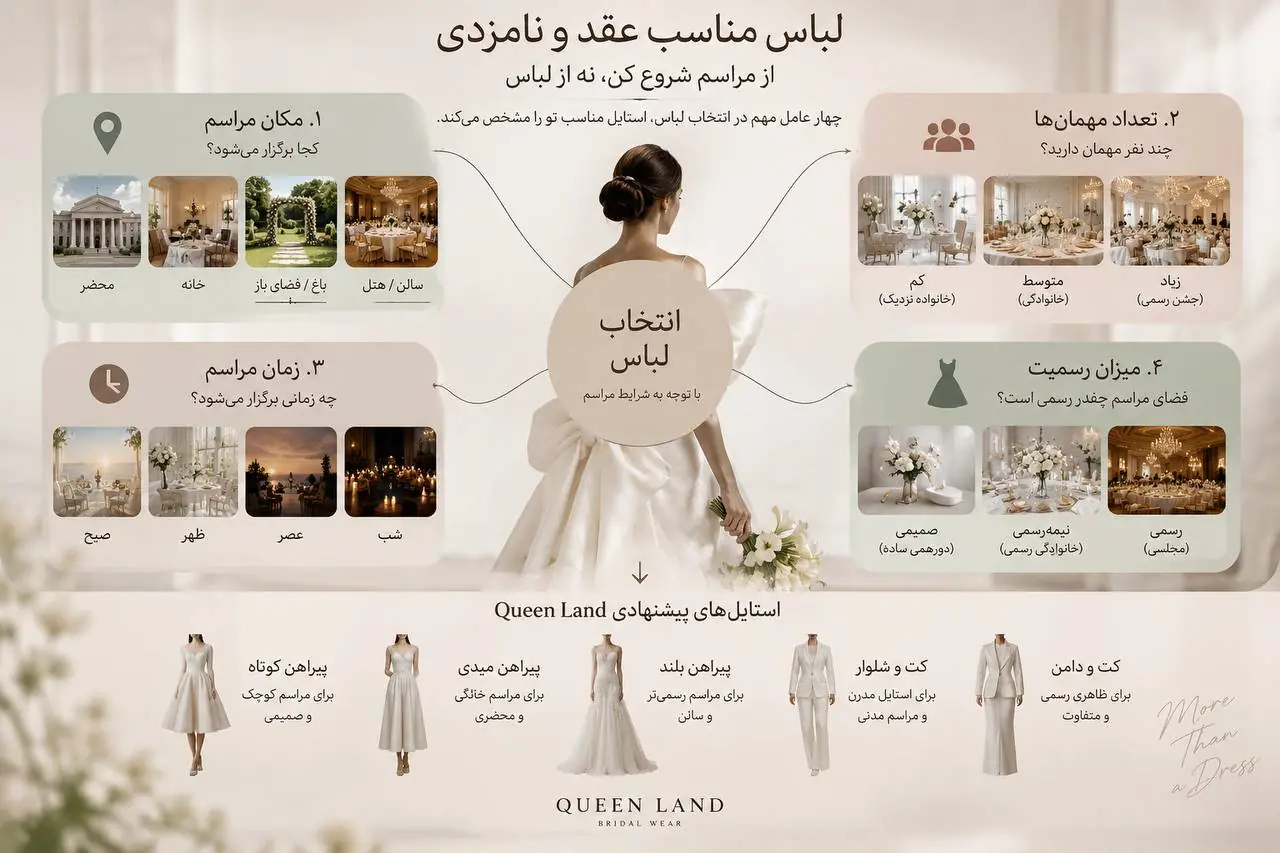
Four Questions to Ask Before Choosing Your Bridal Outfit
Before deciding between a dress, bridal suit, or skirt suit, define these four factors:
Where is the ceremony taking place?
A courthouse, home, garden, restaurant, ballroom, or hotel?
How many guests are attending?
Is it an intimate gathering with close family, or a larger celebration?
What time is the event?
Morning, afternoon, evening, or night?
How formal is the event?
Is it a simple family ceremony or a formal celebration where guests are expected to dress up?
These factors help determine how formal, comfortable, minimal, or glamorous the outfit should be.
How Does the Venue Affect Your Outfit?
The venue is not simply the background for your photographs. It also determines the available space, movement, seating arrangements, and overall atmosphere of the event.
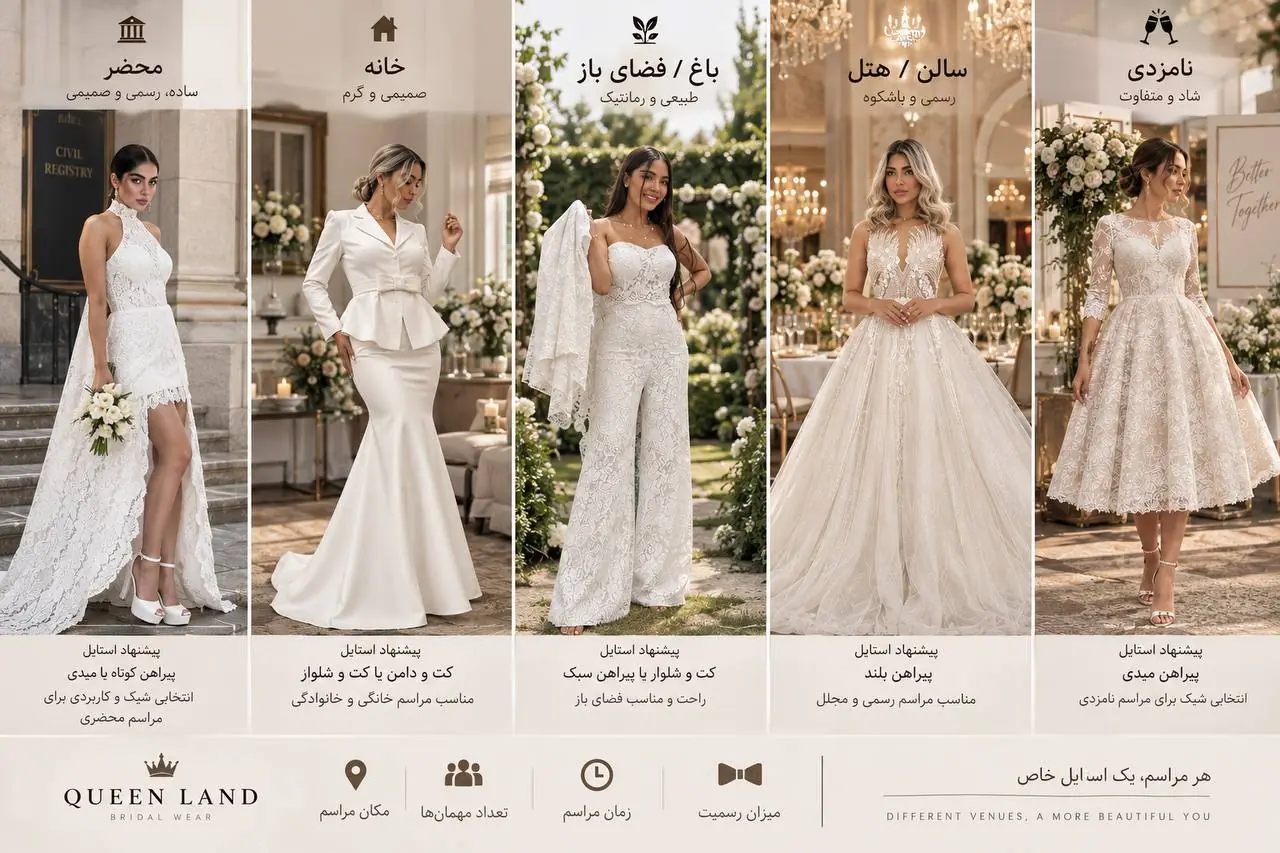
For example, in a civil ceremony where space may be limited, a dress with excessive volume, a very long train, or details that restrict movement may not be practical. In a larger ballroom or formal venue, there is more room for a long gown and a more dramatic bridal look. Guidance for civil ceremony attire
If the Ceremony Is Small and Intimate
A small event does not mean that the outfit has to be plain or completely free of detail. The key is proportion.
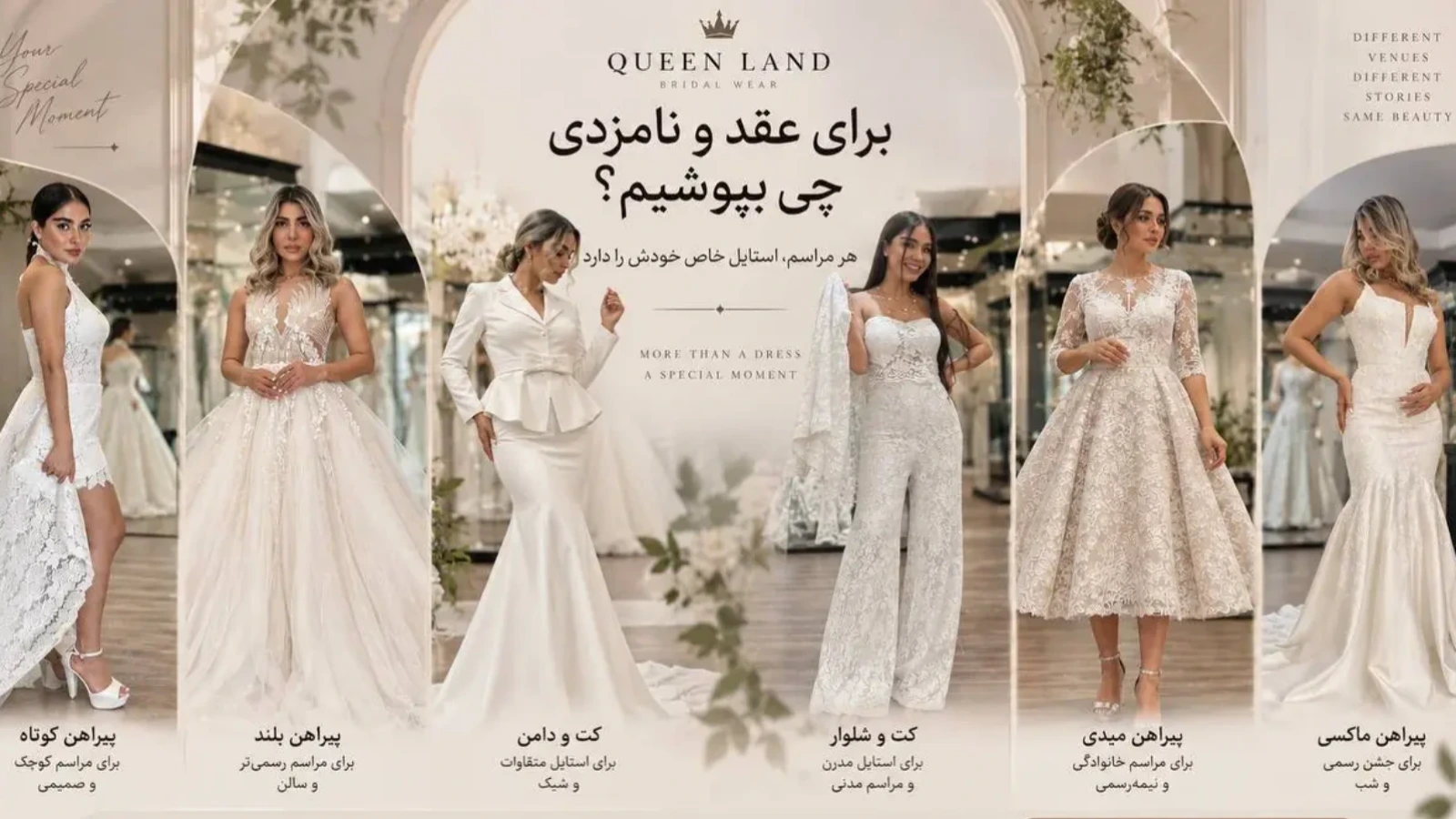
A short or midi dress can still look distinctly bridal without feeling overly formal for a small gathering. A skirt suit or bridal suit can also be an excellent choice for a bride who prefers a more contemporary aesthetic.
Queen Land recommendation:
For a small ceremony, focus less on volume and more on clean construction, quality fabric, a precise fit, and one distinctive design element.
If the Ceremony Takes Place at Home
At a home ceremony or engagement gathering, guests are usually closer to the bride, while much of the event may involve sitting, moving around the house, and taking photographs from a relatively short distance.
The outfit should therefore look beautiful up close while allowing comfortable movement. Depending on the formality of the event, a midi dress, a controlled-volume long dress, skirt suit, or two-piece outfit can all work well.
In this setting, the quality of the fabric, construction, and close-up details becomes particularly important.
Queen Land recommendation:
For a more formal home ceremony, consider a refined midi or long dress. For a more intimate event, a two-piece outfit or lighter dress can create a more relaxed bridal look.
If the Ceremony Is Outdoors
For a garden or outdoor ceremony, appearance is only one consideration. Movement, dress length, and comfort also matter.
Dresses with easier movement and controlled volume are generally more practical for walking and photography outdoors.
However, a garden does not automatically mean a casual dress. An evening garden celebration with many guests can still be highly formal.
Queen Land recommendation:
For a daytime outdoor event, consider lighter and more fluid designs. For a formal evening celebration, a long dress with a more sophisticated finish may be more appropriate.
If the Ceremony Takes Place in a Ballroom or Hotel
A ballroom or hotel usually provides a larger setting and can accommodate a more formal bridal look.
In this situation, a long gown is a classic option, while a formal bridal suit offers a more contemporary alternative. A skirt suit can sit between the two, combining structure with a distinctly feminine silhouette.
If the invitation specifies a dress code, that should be considered before making the final choice. Formal wedding attire guide
Queen Land recommendation:
Instead of simply adding more embellishment, focus on silhouette, fabric quality, fit, and one intentional focal point.
How Many Guests Do You Have?
Guest count does not determine the dress by itself, but it can help you understand the scale of the event.
Imagine two brides, both with 30 guests.
One has a 30-person ceremony at 10 a.m. in a small courthouse, followed by photography.
The other has 30 guests at an 8 p.m. celebration in a ballroom with dinner and formal entertainment.
The guest count is identical, but the appropriate outfits may be completely different.
That is why it is better to think about guest count together with venue and level of formality.
For example:
Small guest list + intimate setting → lighter, more streamlined styling
Medium guest list + family celebration → semi-formal to formal styling
Larger guest list + formal venue → stronger visual presence and a more formal outfit
Does the Time of Day Matter?
Yes. A dress suitable for a 10 a.m. ceremony does not necessarily create the same effect at a 9 p.m. celebration.
For daytime events, lighter fabrics and a cleaner visual appearance can work naturally with the setting. For evening events, especially when the celebration is formal, richer fabrics and more sophisticated details provide more styling possibilities. Formal attire guide by season and venue
Dress, Bridal Suit, or Skirt Suit?
Once the conditions of the event are clear, this decision becomes much easier.
Short or Midi Dress
Suitable for smaller ceremonies, civil ceremonies, family gatherings, and occasions where movement and comfort are important.
Long Dress
A classic choice for formal celebrations, ballrooms, hotels, and evening engagements.
Skirt Suit
A sophisticated option for a bride who wants a structured and formal look without choosing a traditional gown.
Bridal Suit
An especially relevant choice for a modern aesthetic and civil ceremonies. Contemporary bridalwear increasingly includes tailored suits and two-piece looks alongside traditional dresses. Bridal looks for civil ceremonies
How Does Queen Land Choose a Bridal Outfit for Each Event?
At Queen Land, the starting point should be the event itself: Where will the bride wear the outfit? How many guests will attend? What time is the event? And how formal is it?
For a small ceremony, a short or midi dress may be more appropriate. For a formal engagement in a ballroom, a long dress or more formal tailored look may create better visual harmony with the setting.
For brides deciding between a dress and a bridal suit, the decision should also reflect the event and the bride’s personal style. Two-piece bridal looks and tailored suits can be particularly effective for modern civil ceremonies. Civil ceremony bridal dress and suit ideas
This approach also reflects the design philosophy of Queen Land: the outfit should be selected for the bride’s actual event, rather than forcing the event to adapt to the outfit.
A Simple Example
Imagine two brides, both with 30 guests.
Bride One:
30 guests, 10 a.m. ceremony, small courthouse, followed by photography.
Bride Two:
30 guests, 8 p.m. celebration, ballroom, dinner, and formal reception.
The guest count is the same, but the outfit does not have to be.
For the first bride, a short or midi dress, bridal suit, or two-piece look may work naturally with the setting.
For the second bride, a long dress or more formal bridal look may be more appropriate.
So the right question is not simply:
“How many guests do I have?”
It is:
“What kind of event do the venue, guests, timing, and atmosphere create together?”
Bridal Outfit Selection Checklist
Before making your final choice, define:
□ Venue
□ Approximate number of guests
□ Daytime or evening event
□ Level of formality
□ How long you will wear the outfit
□ How much movement and sitting will be required
□ Photography style
□ Shoes and accessories
□ Whether the outfit is intended only for this event or can be worn in other ways later
Once these factors are clear, choosing between a short dress, midi dress, long gown, skirt suit, or bridal suit becomes much more logical.
Frequently Asked Questions
What should I wear to a courthouse wedding?
For a small ceremony in a limited space, a short or midi dress, skirt suit, or bridal suit can be appropriate. If the courthouse ceremony is followed by a more formal celebration, a more formal outfit can also be considered. Courthouse wedding attire guide
What should I wear to a home engagement or civil ceremony?
Consider the number of guests, size of the home, and level of formality. For an intimate event, a short or midi dress or two-piece look can work well. For a more formal home celebration, a long dress or refined skirt suit can be considered.
Should I wear a dress or bridal suit to an engagement?
Both can work. A dress may suit a classic or formal celebration, while a bridal suit or two-piece outfit can create a more contemporary look. The venue and dress code should also be considered. Engagement party attire guide
Do I have to wear white for a civil ceremony?
No. White, ivory, and soft bridal shades are common choices, but the final color should complement the bride’s personal style and the atmosphere of the event.
Is a long dress suitable for a small ceremony?
Yes. A small event does not automatically require a short dress. A simple, well-fitted long dress can work beautifully when its design is appropriate for the scale and atmosphere of the ceremony.
Is a bridal suit suitable for a civil ceremony?
Yes. A bridal suit can be an excellent option for a civil ceremony, particularly for brides who prefer a contemporary, structured look instead of a traditional gown. Bridal suits and civil ceremony looks
What if the civil ceremony and engagement celebration are on the same day?
Think about the entire schedule before choosing the outfit. A versatile two-piece or multi-style design can be particularly practical because different components or accessories can create a different look for each part of the day.
Conclusion
When choosing a bridal outfit for a civil ceremony or engagement, do not start with the dress. Start with the event.
Consider the venue, guest count, timing, and level of formality together, and then decide whether a short dress, midi dress, long gown, skirt suit, or bridal suit is the most suitable choice.
At Queen Land, the same principle can guide the selection process:
Understand the event → understand the bride’s needs → choose the outfit.
The following Queen Land articles can explore each situation in greater detail, from what to wear to a courthouse ceremony to what to wear to a home ceremony and how to choose an engagement outfit.